
.png)

Latest News
A report of a current event, knowledge, information.
.jpg)
Dec 16,2022
Price of Cardano (ADA) Will Experience Massive Drop as 2022 Ends
Technical indicators suggest that the price of ADA will decrease further by the end of 2022. The ADA efforts to challenge the unethical process were recently withdrawn. Traders may exit their positions after the Christmas rally. The current technical situation in the Cardano chart shows that the bottom line of the project, ADA, will end the last 2 weeks of 2022 with a huge loss. Many of the factors that have caused prices to line up over the past week have not had the expected impact on the price of altcoins. This can cause customers to leave their positions for the last Christmas session. Following the euphoria of lower US prices on Tuesday, the ADA price was strongly rejected when it attempted to test the red descending trend on its chart. The decline led to a fall in prices that continued last Friday. Therefore ADA cannot withstand the current market turmoil. Also, the fact that it is off the landing line again means that hope for a break is fading. Retailers may be looking to get out of their stockpiles after Christmas, which will lead to sales next week. This selloff will bring ADA value down to $0.194. ADA is trading at $0.2639 at reporting time after the price fell 1.49% in the last 24 hours according to crypto market monitoring website, CoinMarketCap. The altcoin also decreased against Bitcoin (BTC) and Ethereum (ETH) by 1.36% and 0.93% respectively. The daily RSI on the ADA chart suggests that the ADA price will break below the current 3-day support. This bearish news is also supported by the fact that the 9 day EMA is trading below the 20 day EMA mark.
Read More
 (1).jpg)
Dec 14,2022
Bitcoin hits a one-month higher than expected US price
Major cryptocurrency Bitcoin was on a big rally on Wednesday, hitting its highest level in a month on the back of a sharp slowdown in US inflation data. Generally speaking, the crypto market is currently running with the focus on the FOMC policy meeting. Bitcoin, which dominates the crypto market, approached the $18,000 mark as the weekly performance continued. Additionally, with a rosier-than-expected inflation print, Bitcoin snapped its seven-day losing streak. Other peers such as Ether, Binance, XRP, and Dogecoin have also been on the rise in the past 24 hours. According to data from CoinMarketCap, at the time of writing, the value of the crypto market is around $ 870.29 billion, up 2.58% from the last day. In addition, the market volume increased by 56.82% in the last 24 hours to $52.72 billion. Bitcoin, which has around 39.27% market share, is trading above $17,780 and is up more than 3.5% in the last 24 hours. The crypto market capitalization is about $341.5 billion. Its weekly performance made it higher than 4%. Binance is the most popular cryptocurrency on Wednesday. The current intraday Bitcoin price is $17,930.09. Shivam Thakral, CEO of BuyUcoin, India second oldest crypto exchange, said, "Bitcoin peaked in a month before the important meeting of the Fed. Central banks from the United States, Japan, the EU and the UK will leave their mouths the current population, which will have a significant impact on the movement of the price of digital assets in the short and short term. Bitcoin dominance has crossed the 41% mark, indicating a reduction in risk by a large number of investors. Other peers such as Ethereum jumped almost 4%, while BNB and XRP jumped more than 2% each, and Dogecoin is now up 1.75% in the last 24 hours. On Tuesday, US inflation fell to the lowest level of the year at 7.1% in November, more than the estimate of 7.3%. This month rate is the lowest since December last year. It would also be the fifth consecutive monthly drop in inflation. According to Arcane Research, a weaker-than-expected CPI release on Tuesday pushed BTC higher to $18,000 after seven days of volatile trading. Apart from the CPI, the market was quiet. The company lost momentum after a short period of time, and in turn, volumes and output declined. A dovish stance is now expected from the US Federal Reserve in its December forecast. Most expect a 50bp rate hike rather than the 75bp fourth rate hike forecast. To deal with high interest rates for decades, the FOMC tightened its monetary policy by increasing the key rate by 75 basis points for three consecutive policies. In their market research report dated December 13, Bendik Schei Head of Research and Vetle Lunde Senior Analyst at Arcane Research said, "Although Bitcoin has stabilized around $17,000 without material action in the past few weeks, this week can change because many are important. economic events."
Read More
.jpg)
Dec 13,2022
Bitcoin, Ether Rise in Mixed Trading; US stocks rise ahead of inflation data
Bitcoin, Ether Rise in Mixed Trading; US stocks rise ahead of inflation data Bitcoin and Ether rose on Tuesday morning in trading in Asia, with 10 other major cryptocurrencies seeing mixed performance. BNB and Dogecoin lead to losses, while Polygon and XRP saw huge gains. US stocks rose overnight ahead of the release of November consumer prices on Tuesday and interest rate figures expected on Wednesday. Fast facts Bitcoin gained 0.6% to US$17,207 in the 24 hours to 8am in Hong Kong, while Ether rose 0.8% to US$1,274 according to CoinMarketCap. BNB fell 2.9% to trade at US$276.28. The bottom line of the crypto exchange Binance Global Inc. hit news and analysis of Binance assets may raise a red flag, according to a report in the Wall Street Journal on Saturday. A review of Binance by the research firm Mazars lacks information about the internal credential management and organization of the company, according to the report, citing accounting experts. Total crypto market capitalization rose 0.4% to $849.5 billion, while market volume in the 24 hours to 9:30 a.m. in Hong Kong jumped 29.8% to $35.1 billion. Top memecoin Dogecoin fell 2.8% to US$0.09, while Shiba Inu copycat lost 1.8% to change hands at US$0.000008961. Polygon rose 1.9% to US $0.91 and XRP gained 1.5% to US $0.38. US markets ended higher on Monday. The Dow Jones Industrial Average gained 1.6%, the S and P 500 Index rose 1.4% and the Nasdaq Composite Index ended the day up 1.3%. Investors are waiting for Tuesday for release of the consumer price index for November, which is a key indicator of inflation and the economy. Business economists expect November inflation to be 7.3%, which is the fifth straight monthly decline and the weakest since December 2021. The rate was 7.7% in October, down to 8.2% in September. The US Federal Reserve is expected to raise interest rates by 50 basis points at a two-day meeting of the Federal Open Market Committee that will begin on Tuesday, December 13. It raised the rate by 75 basis points in its previous four meetings. The Fed has raised interest rates since March to curb inflation, from near zero to a 15-year high of 3.75% to 4%, and indicated that rates could eventually rise 5%. The central bank wants growth within its 2% target.
Read More
Dec 12,2022
Latest Cryptocurrency Prices: Bitcoin, Ethereum Down 1%, Dogecoin Down 9%
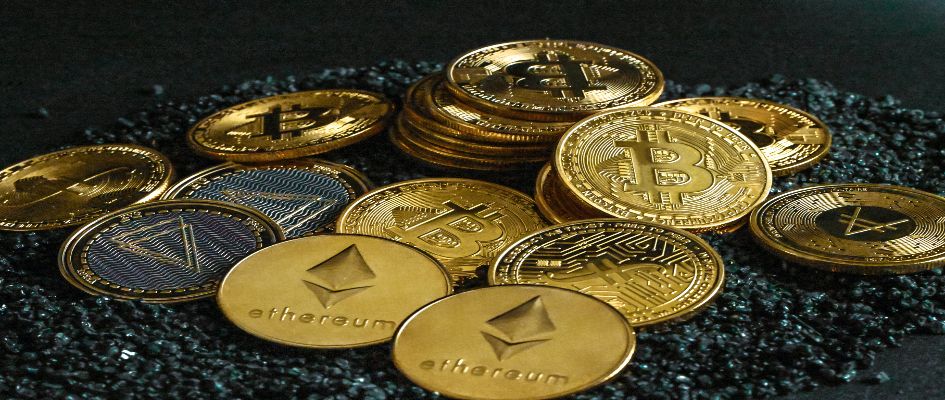
Cryptocurrencies went down on Monday. The global crypto market capitalization stands at $840.2 billion, with volume close to $29.3 billion in the past 24 hours. BitcoinThe worlds largest and most popular cryptocurrency, Bitcoin, fell 1.4% to $16,906.3. Its market value stands at $325.1 billion. The business value is almost $16.3 billion. "Bitcoin is trading in a strong zone, changing hands between $ 17,300 and $ 16,800 for the last two weeks, showing a high limit. However, buyers and sellers the market is defensive at a high level. Immediate support for BTC currently sits at $16,900 and resistance at $17,000,” said Edul Patel, CEO and founder of Mudrex. EthereumThe second largest cryptocurrency, Ethereum or Ether, fell 1.9% to $1,245.5 on a market capitalization of $152.5 billion. Ethereum market cap is $3.9 billion in the last 24 hours. On Ethereum, Patel added, "Ethereum also bought similar lines strongly with BTC. ETH is trading around $1,300 and $1,225." Due to market uncertainty, the price is struggling to move beyond these levels.” Dogecoin Meme virtual currency Dogecoin fell almost 9.1% on Monday. Its market value stands at $11.6 billion. The business value is $413.4 million. Shiba InuShiba Inu fell 4.3% with a market capitalization of $4.9 billion. The trading volume was $115.9 million in the last 24 hours. Solana Solana fell 4.7% to $13 on a market capitalization of $4.8 billion. Solana market value is $149.6 million in the last 24 hours. Polygon Polygon fell 3.4% on a market capitalization of $7.7 billion. The trading volume reached almost $178.5 million in the last 24 hours.
Read More
Related CryptoCurrencies
 White Bitcoin
 Bitcoin
 Ethereum
 Binance Coin
 Solana
Recent News
.png)

VIP WEB3 WALLET CTE PHASE 1 – FULL GUIDE
April 28, 2026
Layer 2 Blockchain & The Future of Decentralized Ecosystems
February 19, 2026


WhiteBitcoin (WBTC) — Official Christmas & New Year Update
December 25, 2025

.png)
.webp)
.webp)


What Are VIP Web3 Wallet?
May 30, 2024
What Is Web3 and Why Does It Matter?
May 30, 2024
© 2026 WBTC Price All Rights Reserved.